
University of the Aegean · Winter School on Mount Olympus
1st Winter School “ChatGPT & AI Apps for Medical Doctors” (AIMedWINTER 2027)
Saturday 13 – Sunday 14 February 2027 · Litochoro, Pieria, at the foot of Mount Olympus, Greece
- Venue
- Naval Museum Hall, Municipality of Dion-Olympos, Litochoro
- Hours
- 09:00–14:00 on both days
- Attendance
- Blended: in person or online
- Fees
- €300 in person · €200 online
- Who it is for
- Students and graduates of Medicine & Dentistry
- Certification
- Certificate of attendance · 0.5 ECTS
What you will learn in two days
Patient Electronic Health Records from ehealth.gov.gr (e-prescriptions, medical interventions, lab tests, etc.).
Full customisation of ChatGPT 6 and appropriate prompts for Advanced Clinical Reasoning Tasks.
Multimodal medical data: interpreting complex medical signals (ECGs, EEGs, etc.) and automatically summarising a patient record.
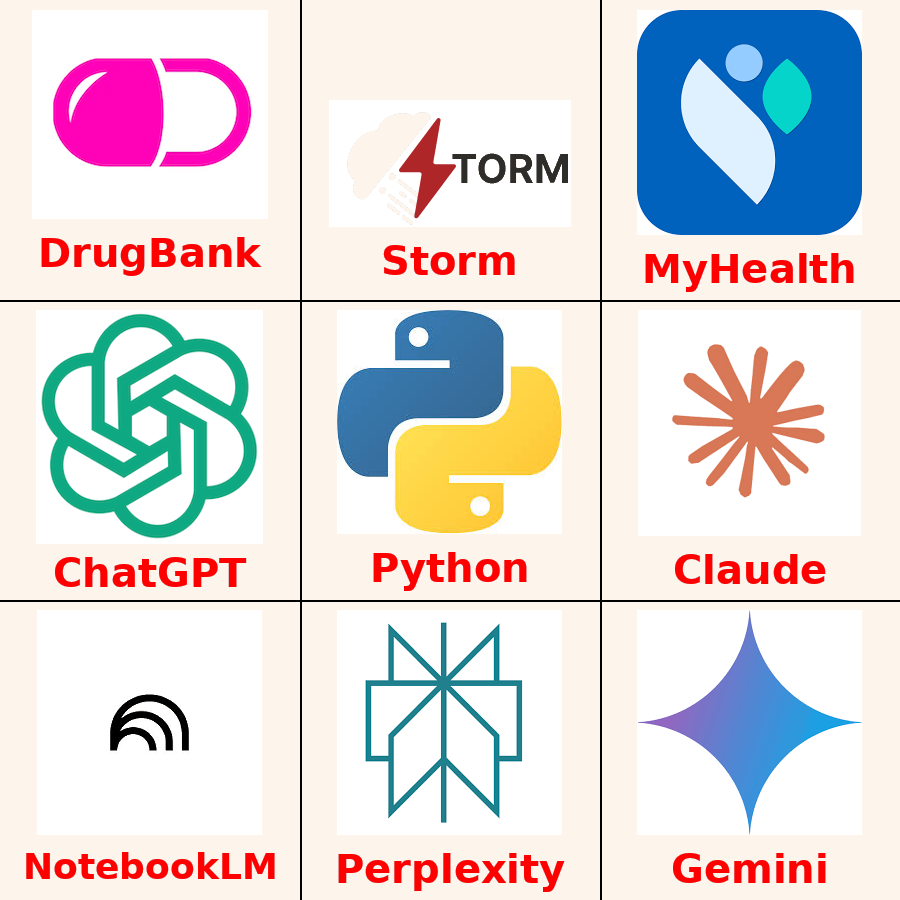
Drug-drug interactions with ChatGPT and biomedical databases (PubMed, DrugBank, etc.).
Med Gemini, Claude and dozens of AI apps for doctors (Perplexity, MedGemma, NotebookLM, etc.).
Agentic AI in Medicine: the ChatGPT Atlas AI Agent and intelligent agents that act autonomously.
Ethics & GDPR: the AI Act, protection of sensitive patient data and anonymisation techniques.
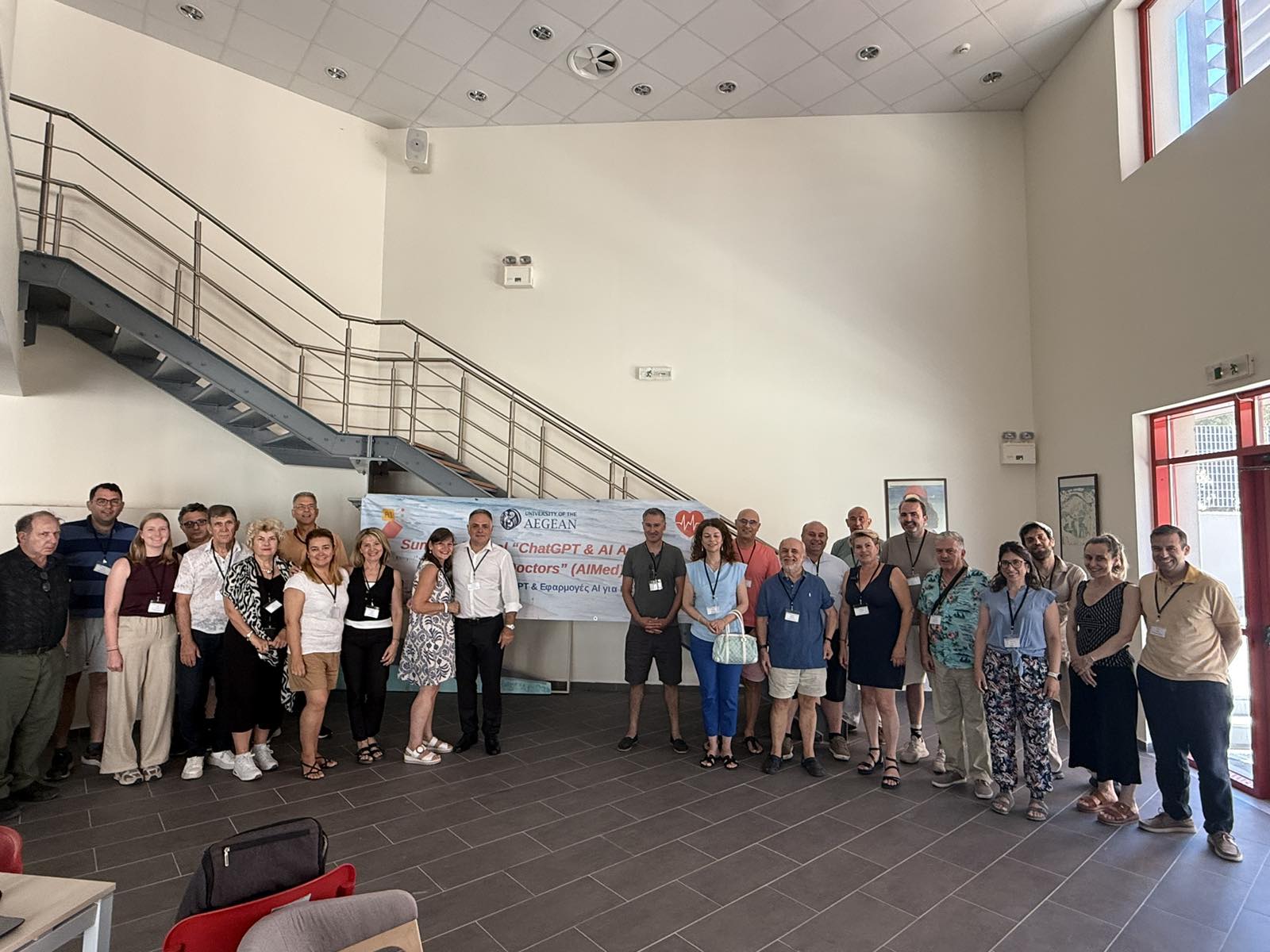
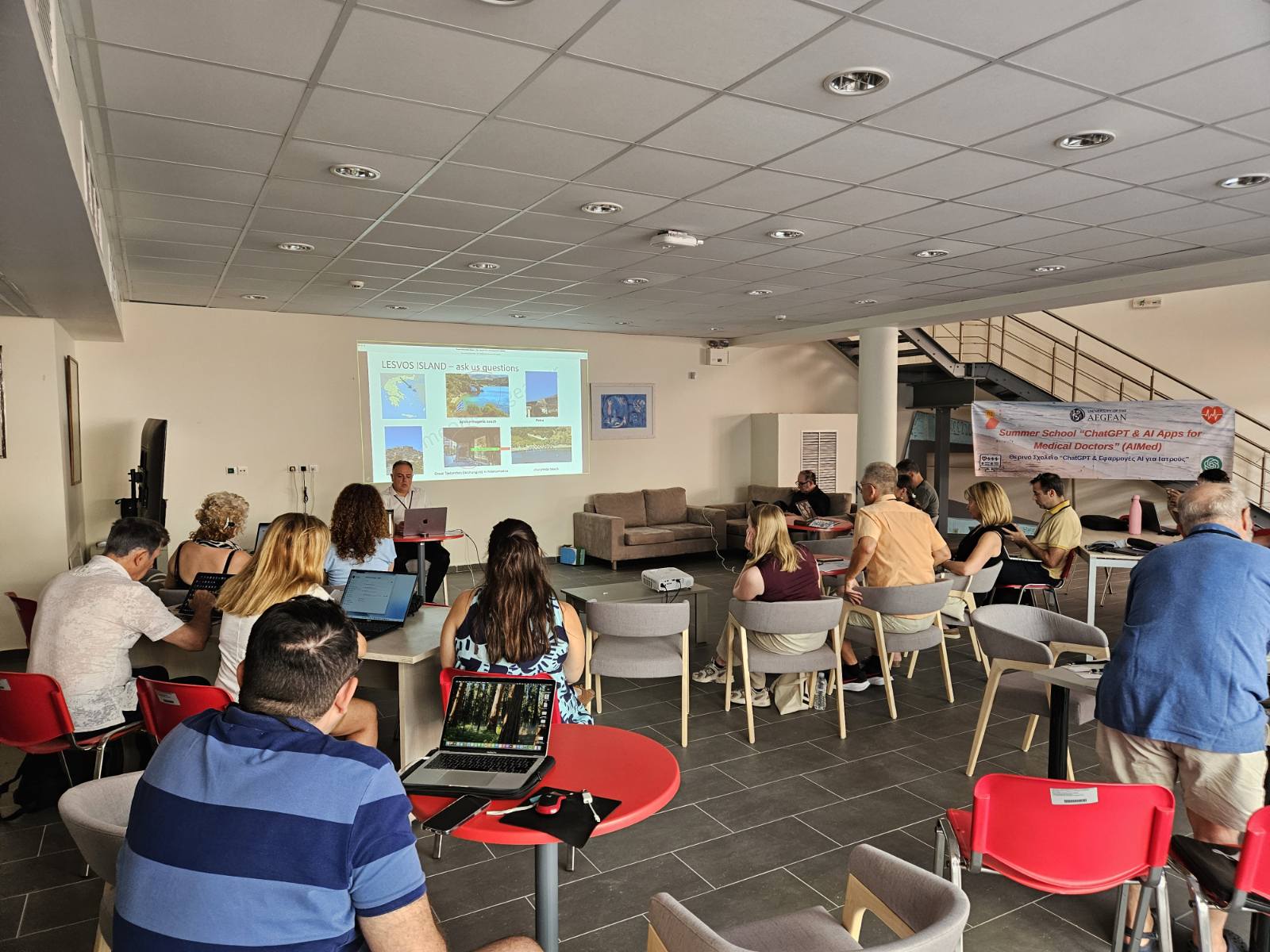
Instructors
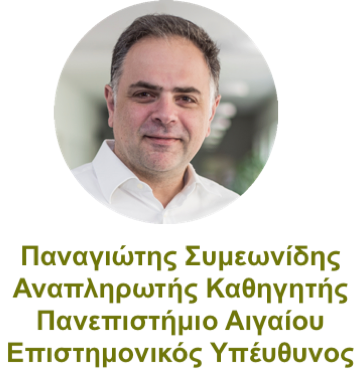
Biography
Panagiotis Symeonidis is Associate Professor at the School of Information and Communication Systems Engineering of the Aegean University, Greece from November 2020. Before, he was Assistant Professor at the Faculty of Computer Science (scientific sector INF/01) of the Free University of Bolzano, Italy, from November 2016 till November 2020. Before moving to Bolzano, he worked for 8 years as Adjunct Assistant Professor at the Department of Informatics of the Aristotle University of Thessaloniki, Greece. He received a B.Sc. degree in Applied Informatics from University of Macedonia at Thessaloniki in 1996. He also received a M.Sc. degree in Information Systems from the same university in 2004. He received his Ph.D. in Web Mining and Information Retrieval for Personalization from the Department of Informatics of the Aristotle University of Thessaloniki in 2008. His research interests include personalized health, AI and Medical Data Management. He is co-author of 3 international books, 2 Greek books, 6 book chapters, 32 journal publications and 46 conference/workshop publications. His published papers have received more than 3600 citations and has an h-index = 31, according to Google Scholar.
Biography
Christos Andras received a bachelor’s in applied informatics from Macedonia University, Greece in 1996 and PhD in Sociology of Internet Technology from the same university in 2009 and MSc in Network and Complexity, Aristotle University Thessaloniki in 2022. Lately he has worked as a Software Developer and System Administrator at the Greek Language Centre, Greece. Currently, he is Specialized and Laboratory Teaching Staff in Department of Industrial Engineering and Management - International Hellenic University, specialized in "Social Information Systems". He is teaching databases and information systems. He has developed commercial applications such as (MyBusiness E.R.P, www.epsiloncomp.gr), information system for the management of psychiatric clinics etc. He is specialized in programming in .NET environment and SQL SERVER databases.
The venue: Litochoro Naval Museum, at the foot of Mount Olympus
Classes take place in the hall of the Naval Museum of the Municipality of Dion-Olympos, in the centre of Litochoro. The hall has a projector, a screen and a microphone at every seat. Coffee, cookies and water are served during the breaks.
Detailed Programme — 10 Teaching Units (2 days × 5 hours)
Each day runs 09:00–14:00, with five 50-minute teaching hours, a coffee break and a short break.
Saturday 13 February 2027
Patient Electronic Health Record and Medical Data Management
| Time | Teaching Unit | Detailed Content | Material |
|---|---|---|---|
 09:00–09:50 |
(Teaching Unit 1) Patient Electronic Health Record Management |
a. Electronic Health Records Management from https://ehealth.gov.gr/ i. Diagnoses b. Health data types (vital signs, bio-indexes and bio-markers (PSA, ECG, etc.), ECGs, CT scans, MRIs and other complex medical signals) c. Case Study of a Boston Hospital's Data (MIMIC III Medical Dataset) |
15 SAMPLE Slides |
 09:50–10:40 |
(Teaching Unit 2) Using ChatGPT for Medical Images and Other Complex Medical Signals |
How to use ChatGPT for interpreting and evaluating complex medical signals, such as electrocardiograms (ECGs). Automated generation of reports based on combined diagnostics and extraction of reasoned medical conclusions.
|
Provided on site |
| 10:40–11:10 · Coffee break (coffee, cookies, water) | |||
 11:10–12:00 |
(Teaching Unit 3) Ethical Issues of AI in Medicine and Protection of Sensitive Medical Data |
a) Artificial Intelligence and Ethical Issues in Medicine b) Protection of Patients' Sensitive Personal Data |
13 SAMPLE Slides |
 12:00–12:50 |
(Teaching Unit 4) Using ChatGPT for Summarising Polymorphic Medical Data |
a. Using ChatGPT for the evaluation of a patient's Electronic Health Record (EHR) i. Patient demographic data b. Using ChatGPT to generate a detailed explanation of a therapeutic regimen for a patient. i. A list of all medications the patient should continue to take after their visit, along with dosage and duration instructions. c. Demonstration of AI software that predicts the optimal insulin dose for a diabetic patient using a Deep Reinforcement Learning algorithm. |
13 SAMPLE Slides |
| 12:50–13:10 · Break | |||
 13:10–14:00 |
(Teaching Unit 5) ChatGPT for Identifying Adverse Drug Reactions |
Use of ChatGPT for finding undesirable drug-drug interactions based on new medicine findings on the Web (e.g. DrugBank, PubMed) a. Undesirable Drug-Drug Interaction Checker |
14 SAMPLE Slides |
Sunday 14 February 2027
AI Algorithms for Medical Data Assessment, Clinical Decision Support and LLMs
| Time | Teaching Unit | Detailed Content | Material |
|---|---|---|---|
 09:00–09:50 |
(Teaching Unit 6) AI Algorithms for Medical Data Assessment and Clinical Decision Support |
a. Innovative AI Algorithms in Biomedicine (e.g. AlphaFold) |
20 SAMPLE Slides |
 09:50–10:40 |
(Teaching Unit 7) Advanced Clinical Reasoning Using Google's Med Gemini |
Example of a Clinical Case study given to Med Gemini: This task requires the model to integrate the patient's symptoms, medical history, physical examination findings and laboratory results to suggest a likely diagnosis (such as heart failure) and recommend appropriate next steps for investigation (e.g. echocardiogram, chest X-ray). a. Demonstration of several examples of complex clinical reasoning tasks made using Google's Med Gemini. |
12 SAMPLE Slides |
| 10:40–11:10 · Coffee break (coffee, cookies, water) | |||
 11:10–12:00 |
(Teaching Unit 8) Appropriate ChatGPT Prompts for Medical Doctors |
a. What are ChatGPT prompts and why are they important? Example of a ChatGPT prompt: e. Study of several different clinical cases along with the creation of adequate ChatGPT prompts |
15 SAMPLE Slides |
|
12:00–12:50
|
(Teaching Unit 9) Artificial Intelligence Applications for Medical Doctors and the Internet of Medical Things (IoMT) |
a. Precision Medicine and Personalised Medicine e. Digitised recording of daily vital signs (blood oxygen saturation, blood pressure, body temperature, heart and respiratory rate, ECG, Continuous Glucose Monitoring, etc.) for real-time monitoring and timely notification of doctors. |
15 SAMPLE Slides 15 SAMPLE Slides |
| 12:50–13:10 · Break | |||
|
13:10–14:00
|
(Teaching Unit 10) ChatGPT Atlas, Agentic AI and Large Language Models (Transformers) |
a) Configuring the ChatGPT Atlas AI Agent to act autonomously on the Web b) Transformers Example of a ChatGPT pre-prompt: "I have uploaded a Word file… Based on this template file, generate a new detailed therapeutic regimen for the patient under examination…" |
Provided on site |
Assessment and certification
Participants submit a composite assignment: the evaluation of an expanded patient medical record consisting of rich and polymorphic medical data (progress textual notes, CSV files, Word files, PDFs, ECGs, etc.) using AI techniques and ChatGPT.
On successful completion, a certificate of attendance with 0.5 ECTS is awarded (10 hours of attendance and 2.5 hours of assignment work).